
GST No: 07ABNPC8211H1ZT
ISO Certified: ISO 9001:2015

×
![]()
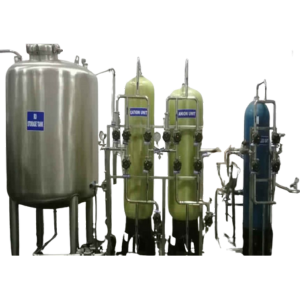
Model: Demineralization Water Plant
Demineralization Water Plant Manufacturer in Delhi NCR. Watershed is one of the leading and well-known Demineralization water plant manufacturers, suppliers, traders and exporters in Delhi NCR. Contact us and get the best products.
A demineralisation water plant, also known as aDM plantordeionisation plant,isa water treatment system that removes dissolved minerals and salts from water using ion exchange.This process produces highly purified water, often referred to as demineralised or deionised water, which is essential for various industrial applications.
Demineralization Water Plant Manufacturer in Delhi NCR
Industrial growth in Himachal Pradesh has created a strong demand for high-purity water solutions across sectors like pharmaceuticals, power generation, food processing, and manufacturing. Businesses require advanced water treatment systems that remove dissolved salts and minerals to ensure smooth operations and high product quality. Choosing a reliable Demineralization Water Plant Manufacturer in Delhi NCR is essential for industries seeking consistent performance, efficiency, and long-term reliability.
A demineralization (DM) water plant is designed to remove dissolved minerals, salts, and impurities from water through ion-exchange processes. These systems deliver highly purified water suitable for industrial and commercial applications where mineral-free water is critical.
What is a Demineralization Water Plant?
A Demineralization (DM) Water Plant is an industrial system designed to remove dissolved mineral salts from water. While standard filtration removes suspended solids (like dirt or sand), demineralization goes much deeper. It targets the chemical composition of the water itself.
The process typically uses a method called Ion Exchange. The water flows through columns packed with specialized resins. These resins act like powerful magnets for minerals.
- Cation Exchange: The resin captures positively charged ions (cations) like calcium and magnesium and swaps them for hydrogen ions.
- Anion Exchange: The resin captures negatively charged ions (anions) like sulfates and chlorides and swaps them for hydroxyl ions.
When these hydrogen and hydroxyl ions combine, they form pure water (H2O). The result is water that is chemically neutral and free from the minerals that cause buildup in pipes and boilers.
Key Features of Demineralization Water Plant
Modern DM plants are sophisticated pieces of engineering. When looking at systems from a reputable manufacturer, you should expect several key features that ensure efficiency and longevity.
- High-Quality Resin Bed: The core of the system is the resin. Top-tier plants use high-capacity ion exchange resins that last longer and require less frequent regeneration.
- FRP or Mild Steel Vessels: To resist corrosion, the pressure vessels (tanks) are usually made from Fiber Reinforced Plastic (FRP) or rubber-lined Mild Steel (MSRL). This ensures the tank itself doesn't contaminate the water.
- Conductivity Meters: Precision is key. A good plant includes digital conductivity meters that constantly monitor the water quality. If the mineral content rises, the system alerts the operator immediately.
- Semi-Automatic or Automatic Valves: Manual operation leaves room for error. Modern systems use multi-port valves or PLC-based automation to handle the backwashing and regeneration cycles, reducing the need for manual labor.
Applications of Demineralization Water Plant
The utility of DM water extends across almost every sector of the industrial landscape. Because dissolved minerals can conduct electricity and cause scale deposits, removing them is non-negotiable for many processes.
- Pharmaceutical Industry: Himachal Pradesh, particularly the Baddi region, is known as the pharma hub of India. Drug manufacturing requires exceptionally pure water to ensure product safety and compliance with strict health regulations.
- Boiler Feed Water: In power plants and textile mills, water is boiled to create steam. If that water contains minerals, they form hard scale on the boiler tubes. This scale reduces heat transfer and can even cause boilers to explode. DM water prevents this completely.
- Automobile Industry: DM water is used extensively in battery manufacturing and for the final rinse of vehicle bodies before painting to ensure a spotless finish.
Leading Demineralization Water Plant Manufacturer in Delhi NCR
Watershed has established itself as a leading Demineralization Water Plant Manufacturer in Delhi NCR by delivering reliable, high-performance water treatment solutions. Our expertise lies in understanding the specific needs of industries and offering tailor-made systems that ensure maximum efficiency and compliance with industry standards.
Why choose Watershed?
- Detailed water analysis and consultation.
- Customized system design and engineering.
- High-quality components and certified materials.
- Professional installation and commissioning.
- Comprehensive after-sales support and maintenance.
Our team of skilled engineers and technical experts ensures that every DM plant meets strict quality standards and operates seamlessly. We focus on long-term client relationships by providing prompt service support and cost-effective solutions.
Conclusion
Water is the lifeblood of industry, but only when it is pure. Demineralization technology provides the safeguard industries need to protect their equipment and ensure product quality. By removing harmful dissolved solids, these plants extend the lifespan of machinery and improve overall efficiency.
Choosing the right partner for this technology is vital. As a leading Demineralization Water Plant Manufacturer in Delhi NCR, Watershed offers the expertise, technology, and support necessary to keep your operations running smoothly. Don't let poor water quality compromise your business—invest in a proven demineralization solution today.