
ISO Certified: ISO 9001:2015

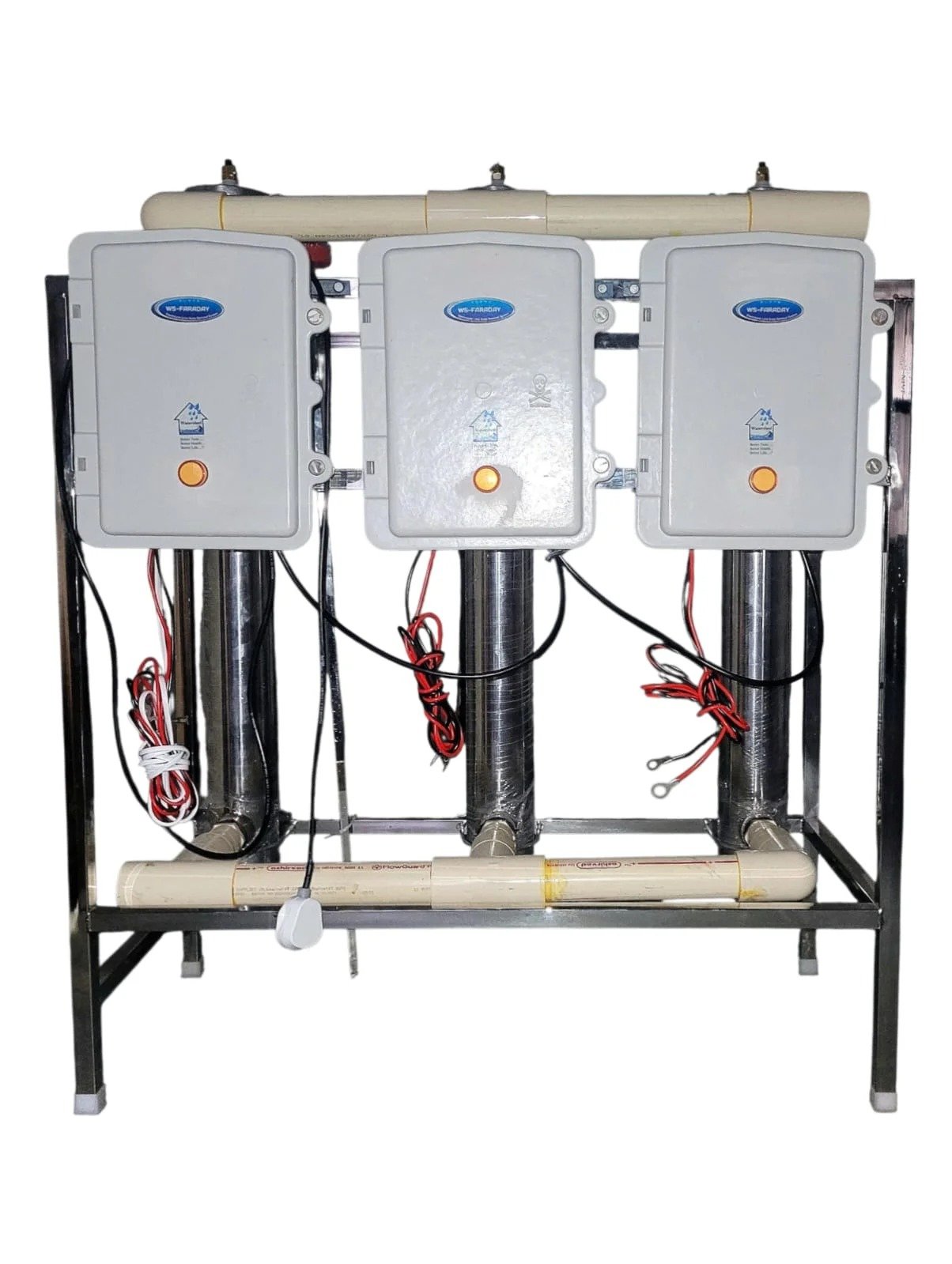
Electrolysis Lime Scale Removal System in Haryana
The presence of hard water could pose numerous challenges to industries and businesses. Minerals, specifically calcium and magnesium compounds, could build up in pipelines, cooling towers, heat exchangers, and other water processing equipment, leading to reduced flow of water, inefficient heat exchange, and higher maintenance needs.
Innovative water treatment technologies offer some other options to address these issues. The Electrolysis Lime Scale Removal System in Haryana controls the development of lime scale through the process of electrolysis, during which the lime-forming minerals precipitate in the treatment tank instead of building up on the equipment.
Watershed Aqua Engineers provides the electrolysis-based solution for removing scales at both residential and commercial level. Companies might consider such systems to assess whether the electrochemical process is appropriate for them.
Electrolysis Lime Scale Removal System Defined
An electrolysis lime scale removal system is an apparatus that utilizes electricity to affect the behavior of dissolved minerals in water. With proper designs, electrochemical processes in such a system ensure conditions conducive for the precipitation of calcium carbonate and other mineral compounds.
The deposition of such minerals takes place in the treatment chamber either on designated surfaces or within the reactor depending on the design of the system. These accumulated minerals may then be removed via the recommended process of cleaning or flushing.
An electrolysis scale removal system is not always capable of lowering the hardness of water like an ion-exchange water softener. The main objective of the electrolysis system is the management of the mineral deposition process.
Hence, companies should understand that there is a difference between scale control and water softening when choosing equipment.
How Does Electrolysis Scale Removal Technology Operate?
A comprehension of the underlying principle of operation assists business organizations in choosing whether the technology is applicable for their case.
1. Water Flows into the Treatment Unit
The system receives water from the connected pipeline or circulation loop. This is based on the type of flow rate, water chemistry, pipe diameter, among other factors.
2. Electromechanical Processes Occur
Electrical current flows across electrodes installed in the treatment unit. This alters the chemical environment in the area of operation.
3. Scale-Forming Minerals Become Deposits
In certain circumstances, calcium carbonate and other mineral compounds may precipitate and form deposits. The system works such that these deposits form in the treatment unit itself and not elsewhere in the water line.
4. Removal of Deposits Takes Place
This is dependent on the setup in use. It may be carried out manually, automatically, or by flushing. Maintenance services help to ensure that the treatment unit operates effectively.
These will vary depending on water chemistry, operating parameters, system sizing, among others. Business enterprises are encouraged to evaluate performance from water analysis and site assessment.
Advantages of Electrolysis-based Lime Scale Removal System in Haryana
For industries searching for alternatives to regular chemical scale control programs, electrolysis-based system is worth considering for certain applications.
Aids in Managing Mineral Scale
The accumulation of minerals in pipelines, heat exchangers, and coolers is possible. A right electrolysis system can help in managing scale deposition process and precipitate minerals inside the treatment unit.
Decreases the Usage of Some Chemicals
Certain electrolysis-based systems are capable of functioning without any chemical additions to the system on a regular basis. Other treatment chemicals will be necessary depending on the application, water chemistry, risk of corrosion and necessity of microorganisms' control.
Increases the Efficiency of Equipment
It is possible for the scale to interfere with heat transfer and water flow. Proper scale management might help in maintaining the efficiency of the equipment and eliminating unnecessary cleaning breaks.
Provides Alternative Treatment Technology
Electrolysis-based treatment process can be considered as an alternative way for scale control. The applicability of the system depends on the water quality and current treatment program.
Can Help Support Water Management Objectives
While some systems can help reduce the need for cleaning or water losses from scaling maintenance, savings in water, energy, labor, or operational costs have to be demonstrated for each system individually.
Industrial Uses in Haryana
There are manufacturing plants, commercial buildings, engineering works, pharmaceutical industry, and other industrial establishments that need proper water circulation and heat transfer.
The appropriate Electrolysis Lime Scale Removal System in Haryana can be used for the following purposes.
Cooling Towers
As the water evaporates in cooling towers, dissolved minerals are concentrated. Electrochemical treatment might be useful in controlling calcium carbonate deposits in the right kind of cooling water system.
Heat Exchangers and Chillers
There will be a problem in heat exchange because of scale deposits. There is need to use scale removal technology in controlling mineral deposits and in maintaining equipment.
Industrial Pipelines
In pipelines there is a possibility of having mineral deposits which can hinder the flow of water. This needs proper treatment depending on materials of the pipe, water composition, pressure, and mineral deposits present.
Boilers and Related Systems
Proper water chemistry is necessary in boilers. Electrolysis treatment can only be used in situations where the system and water treatment program allow for it. It does not necessarily mean that the boiler feed water treatment and corrosion control are not needed.
Commercial Buildings
Hotels, hospitals, and large commercial buildings can assess scale control technology for the proper cooling and water distribution systems.
How to Select the Correct System
The selection of appropriate equipment demands thorough knowledge about installation and water quality.
Before seeking a quotation, you need the following information:
Water Quality: Test results for hardness, total dissolved solids, alkalinity, and other such data needs to be provided.
Flow Rate: Flow rate in liters/hour or cubic meters/hour needs to be specified.
Pipe Details: Diameter of pipes and installation arrangement needs to be shared.
Purpose: Whether the system is to be used for cooling tower, heat exchanger, chiller or any other process.
Operating Conditions: The temperature and circulation arrangement along with operating hours needs to be explained.
Maintenance Requirement: How will the system dispose of collected scale and maintenance requirement needs to be clarified.
A reputed Electrolytic Lime Scale Removal System Supplier in Haryana must review all these details before suggesting an appropriate configuration.
In addition to this, businesses also need technical specifications, installation requirements, warranty details and performance criteria.
System Maintenance and Performance Review
System monitoring is important in establishing whether the electrolysis scale removal technology remains compatible with the installation requirements.
It is necessary for the operators to examine the chamber, evaluate the electrical connections and controls and clean up the mineral buildup according to the specifications provided by the manufacturer. Flow rates and pressure measurements should be performed as well as observation of scale formation within the connected devices.
Periodic testing of the water may be useful in measuring its hardness, alkalinity and other parameters where appropriate. It should be noted that reduction in scale formation does not always reflect lower water hardness.
It is important for companies to establish a maintenance schedule and review performance periodically.
Conclusion
Scale formation may have an influence on the performance and maintenance needs of industrial water systems. Electrolysis-based technology provides a different means of combating scale formation by inducing scale-forming minerals to form precipitates within a specific treatment chamber.
Watershed Aqua Engineers is an electrolysis lime scale removal system supplier for those interested in finding out about modern scale control systems. The appropriate system will be determined by water characteristics, flow rate, design, and end use.
If you are searching for Electrolysis Lime Scale Removal System in Haryana, click here to learn more about the system and obtain a quotation.